

After a hard training session or a long day on your feet, your legs often feel heavy, tight or achy. That’s where Recovery boots come in. They offer a modern, passive recovery tool that complements massage, stretching and other recovery practices.
What are recovery boots, Why do they help & How to use them.
What are Recovery Boots?
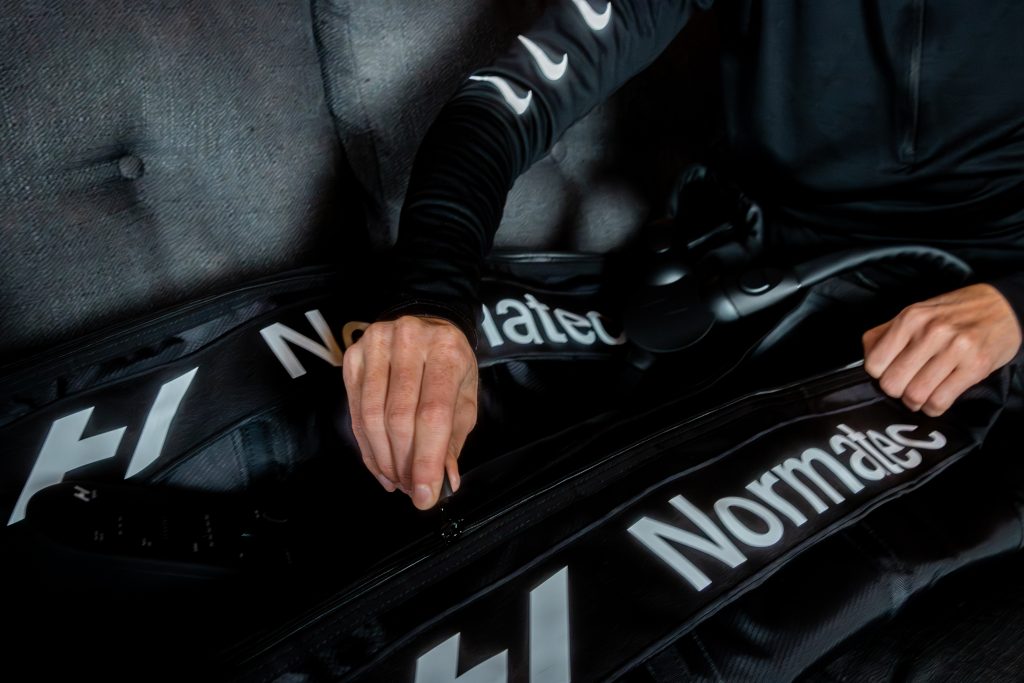
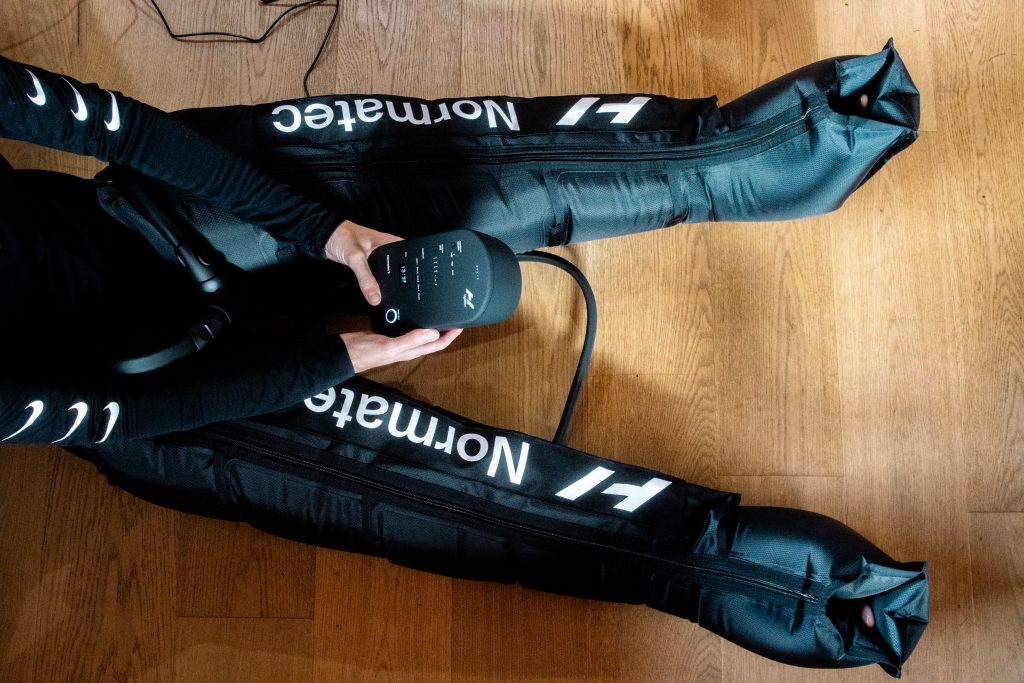
Recovery Boots or Compression boots are devices that wrap around your legs and inflate/deflate sequentially to apply and release pressure.

How They Work
The boots deliver a sequence of air-compression “waves” that mimic a muscle pump effect, pushing fluid (blood, lymph) up the legs toward the heart. This aims to enhance circulation, promote clearance of metabolic by-products, reduce fluid pooling and swelling, and support muscle/soft-tissue recovery.
When and how to use them: A practical routine
1. Timing is key
- Ideally: Use the recovery boots within 30-60 minutes after your training session – when your body’s recovery systems (metabolism, circulation) are still highly active. This is similar to the ‘open window’ concept.
- If you’re using them on a rest day or a non-training day, you can still do so, but the ‘post-workout window’ offers the best potential benefit.
2. Position yourself appropriately
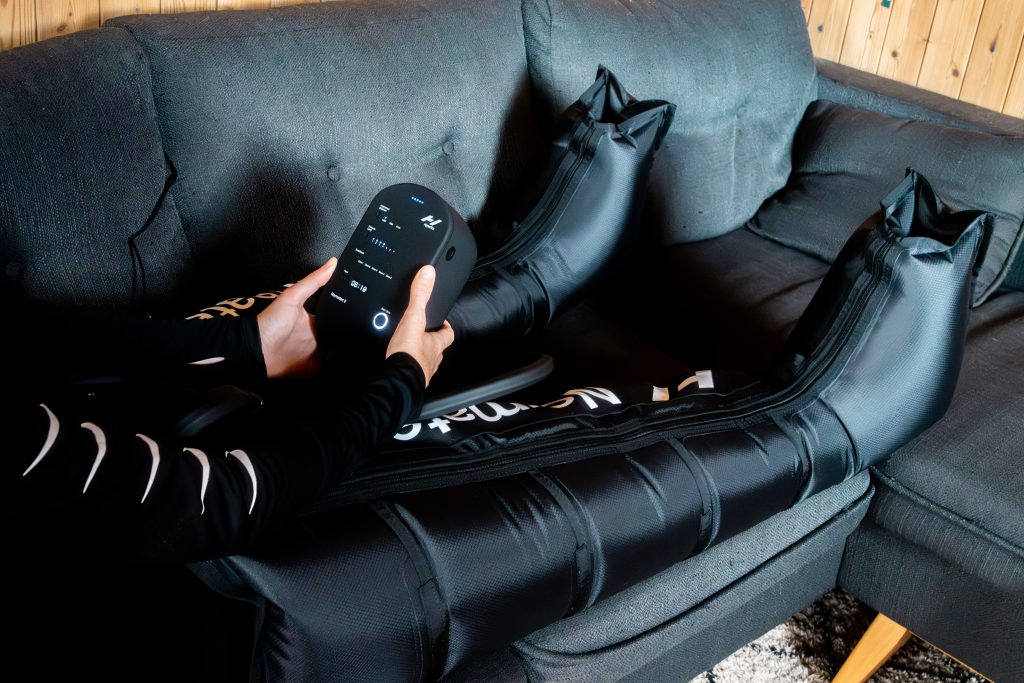
- Use the boots while lying down or reclining so your legs are extended and elevated a little if possible. This helps gravity assist the flow toward your heart.
- Make sure the air hoses are free and not kinked, and the boots are properly aligned.
3. Session duration and pressure
- For most users, a session of 30-50 minutes is appropriate; some shorter sessions (20-30 min) can still benefit depending on recovery needs.
- Start at a moderate pressure level; let it feel comfortable rather than aggressively tight. The aim is recovery, not challenge.
- If your legs feel especially fatigued, you may use slightly higher pressure; on lighter or active recovery days, lower pressure may suffice.
4. Combine with hydration + relaxation
- Being well hydrated supports circulation and lymphatic drainage. Drink water before, during (if needed) and after your session.
- Use the time to truly relax – mental rest is also part of your recovery.
- You can follow the compression session with gentle stretching, foam-rolling or mobility work if you like.
5. Avoid these mis-steps
- Do not use the boots if you suspect a fracture, active deep vein thrombosis (DVT), severe peripheral artery disease or uncontrolled conditions. Always check with a medical professional if you’re unsure.
- Do not rely only on compression boots for recovery – they are a tool, not a replacement for fundamental recovery practices.
Simple Recovery Routine for my Clients
Here’s a simple routine you could try!
- Training / activity: Complete a lower-body heavy workout (squats, lunges) or a long run/cycling session. (I love MadFit workouts on youtube!)
- Massage session: Have a massage in the comfort of your home (eg. deep tissue on legs, glutes).
- Compression boots: Immediately following the massage (or within 30 min), use the compression boots for 30-40 minutes, pressure set at comfortable level. Legs slightly elevated if possible, and Hydrate!
- Post-session: Finish with gentle stretching & mobility work.
- Repeat regularly: For clients training several times per week, using compression boots after intense sessions or on heavy legs days may help maintain recovery momentum.
Boom, and there you go! Hopefully this gives you a little more insight to the recovery boots and how they can help you! If you’d like to get booked in for a session drop me a message on WhatsApp +33771816389 or on email info@mpmassagetherapy.com. You can enjoy a session in combination with a massage, or rent them to use at home for either 60 minutes, over night or a full weekend.